
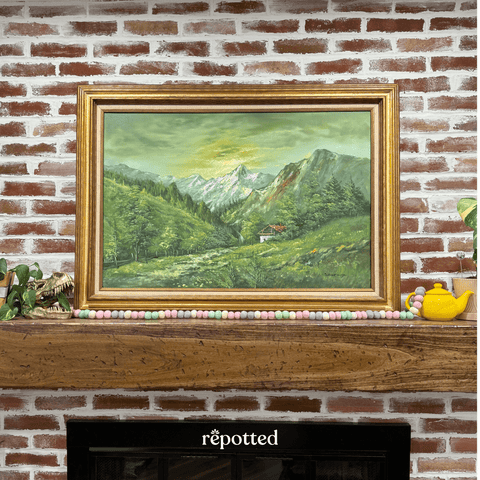
Photo: My $10 Thrifted Painting
Why Thrifting Matters More Than Ever
In uncertain economic times, secondhand shopping is more than a budget hack; it’s a way to opt out of the fast-consumption cycle and build a more intentional, grounded life.
You’re not just saving money. You’re reducing waste. You’re choosing quality. And you’re making your home feel more you, one well-loved piece at a time.
There’s a certain magic in thrifting— the thrill of discovery, the satisfaction of saving money, and the joy of giving something old a new life. But if you’re shopping with intention, not everything is worth bringing home.
At Repotted, we believe in slow living, sustainable choices, and creating a home that feels grounded and well-loved. Thrifting is one of the most affordable and eco-friendly ways to do that, but only if you know what to look for-- and what to avoid!
Here are 5 things that are actually worth thrifting, plus a few safety tips to make sure you don’t bring home any unwanted guests (looking at you, bed bugs 🐞).
🌿 1. Natural Fiber Clothing & Textiles (Cotton, Linen, Wool)
Skip the fast-fashion poly blends and scan the tags for 100% cotton, linen, wool, or even silk. These natural materials are longer-lasting, more breathable, and easier on your skin.
Great finds include:
-
Oversized cotton button-ups or flannels
-
Linen tablecloths or napkins
-
Wool blankets (check for moth holes!)
- Denim jeans (check for name brands)
Safety Tip: Wash all textiles immediately in hot water with soap powder and a few drops of tea tree or eucalyptus oil. If you're concerned about bed bugs or moths, pop items in the dryer on high heat for 30 minutes before washing or leave in the sun for a few hours.
🌱 2. Plant Pots & Garden Supplies
Your local thrift store can be a goldmine for affordable gardening gear:
-
Terra cotta or glazed ceramic pots
-
Vintage pitchers (perfect for propagations!)
-
Watering cans, hand tools, baskets, seed trays
Inspect carefully: Make sure pots aren’t cracked through and check that there's drainage or a way to drill holes. Avoid plastic planters if possible—they’re less sustainable and degrade quickly.
Clean tip: Soak planters in white vinegar to sanitize and remove any old plant residue and wash with dish soap.
🪑 3. Solid Wood Furniture
Solid wood is hard to find (and expensive) in most new furniture. Thrifted wood pieces are often sturdier, more beautiful, and can be refinished or painted for a custom look.
Look for:
-
Dovetail joints
-
Real wood grain (not laminate)
-
Functional drawers and legs
Avoid: Pieces with soft, crumbling wood, mildew smells, or deep water damage.
☕ 4. Timeless Kitchenware (That’s Also Low-Tox)
Secondhand stores are often full of high-quality kitchen essentials, many of which are safer than today’s mass-produced cookware. You'd be amazed at the difference in quality.
Worth grabbing:
-
Cast iron pans
-
Stoneware baking dishes
-
Glass storage containers
-
Stainless steel utensils or bowls
Avoid: Nonstick pans (repeat after me: scratched should be trashed!), cloudy plastic or plastic cookware in general, or unknown metals.
🧺 5. Baskets, Jars, and Beautiful Storage
Functional storage doesn’t have to be plastic bins. Thrifted baskets and jars add charm while keeping your home organized. Buying these new can be costly, especially if you opt for better quality over mass-produced.
Look for:
-
Woven baskets for blankets, toys, or plant styling
-
Mason jars for dry goods or DIY cleaners (avoid rusted lids unless strictly for decor)
-
Glass bottles and crocks for floral stems
Clean tip: Wash glass items with hot water and soap; sanitize with vinegar. For baskets, vacuum out dust and spray lightly with a vinegar-water blend to refresh. If it's sunny, leave baskets outside for a fwe hours of sun sterilization.
⚠️ Thrifting Safety Tips: What to Check Before You Buy
To thrift sustainably and safely, keep these precautions in mind:
-
Inspect for signs of bed bugs: Especially in fabric items and furniture. Look for tiny dark specks or eggs in seams or crevices. If it's questionable, leave it be and sanitize immediately.
-
Avoid upholstered items unless you’re confident you can deep clean or reupholster. Bed bugs and mold can hide in padding.
-
Give everything a deep clean before bringing it into your home. Hot water, natural disinfectants, and sunlight work wonders.
-
Trust your nose. If it smells musty, moldy, or chemically off, it’s not worth the risk.
Want More Sustainable Living Tips?
Sign up for our email list to get cozy, low-tox lifestyle tips in your inbox. Plus, get first access to plant and coffee restocks, behind-the-scenes stories, and more.
Let’s grow a life that feels good.
Sydney


Comments (0)
There are no comments for this article. Be the first one to leave a message!